The Biggest Threat to Blogging Since the Birth of Search Engines
For nearly two decades, bloggers relied on a simple formula: create valuable content, rank on Google, attract visitors, and monetize through ads, affiliate marketing, products, and services. That formula is changing rapidly.
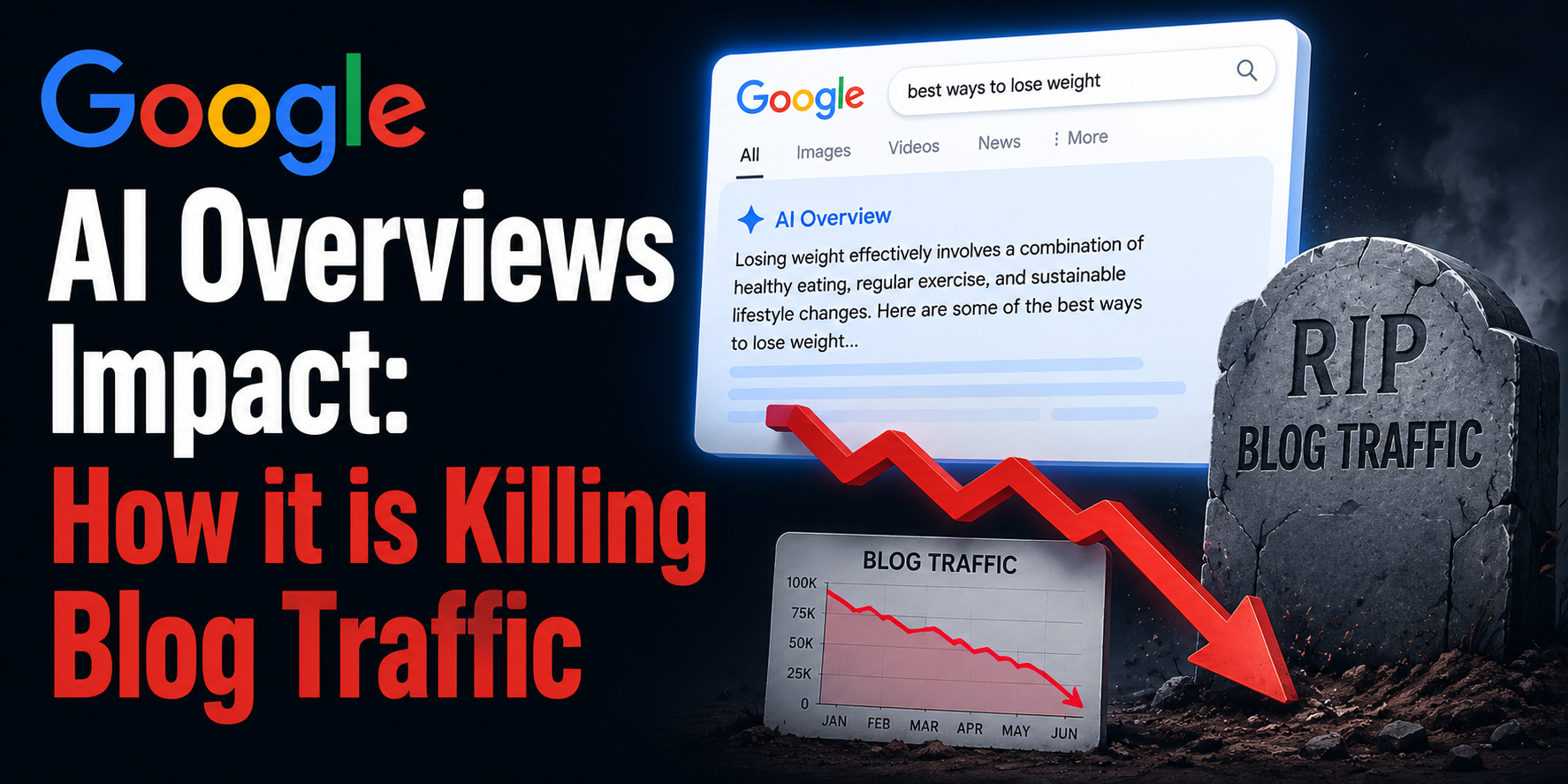
Google’s AI Overviews have fundamentally altered how users interact with search results. Instead of clicking through to websites, users increasingly receive complete answers directly within Google’s search interface. As a result, countless websites are experiencing declining organic traffic, reduced ad revenue, lower affiliate conversions, and fewer opportunities to build loyal audiences.
The reality is clear: AI Overviews are reshaping search behavior, and websites that fail to adapt risk becoming invisible.
This guide explores exactly how AI Overviews affect blog traffic, why traditional SEO strategies are losing effectiveness, and the practical steps publishers must take to survive and grow in the AI-powered search era.
What Are Google AI Overviews?
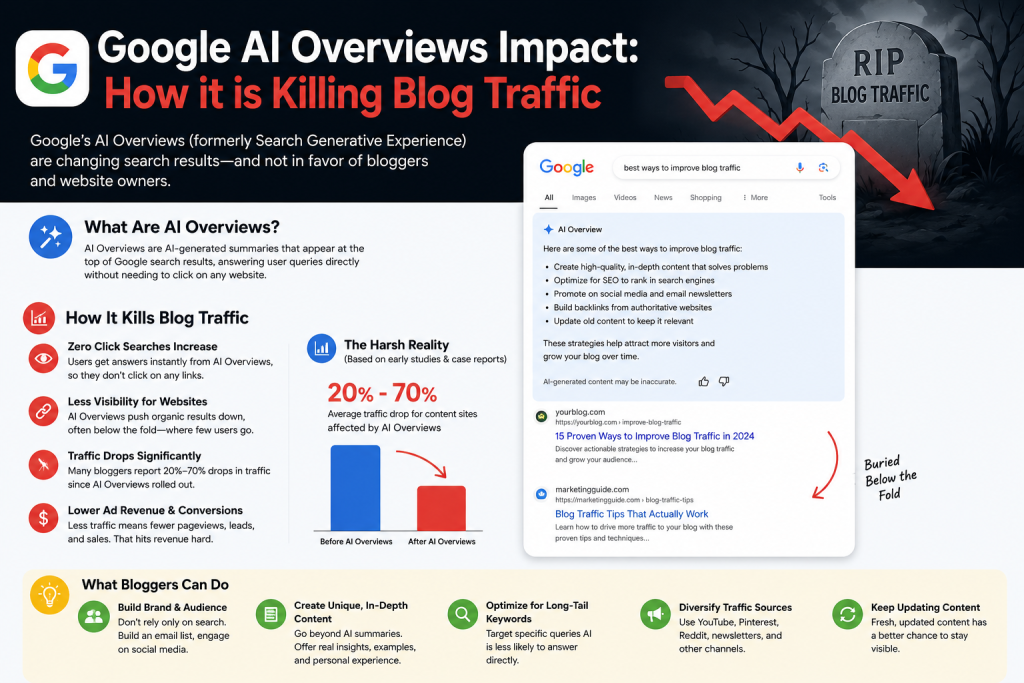
Google AI Overviews are AI-generated summaries that appear at the top of search results for many informational queries.
Instead of showing ten blue links and allowing users to choose a source, Google now aggregates information from multiple websites and presents a synthesized answer directly on the search results page.
For users, this creates convenience.
For publishers, it creates a major problem.
When searchers find answers without leaving Google, fewer people visit the websites that originally created the content.
This phenomenon is commonly referred to as the “zero-click search” trend.
Why Blog Traffic Is Declining in 2026
1. Fewer Clicks from Informational Searches
Historically, informational keywords generated enormous amounts of traffic.
Examples include:
- How to start a blog
- Best SEO practices
- What is affiliate marketing
- How AI works
- Content marketing strategies
Today, Google often answers these questions directly through AI Overviews.
As a result, users receive the information they need without visiting external websites.
Many publishers report significant traffic declines for informational content that previously drove thousands of monthly visitors.
2. Google Is Becoming the Destination
Search engines once acted as gateways to websites.
Now Google increasingly functions as the destination itself.
Users can:
- Read summaries
- Compare products
- View reviews
- Get recommendations
- Receive step-by-step instructions
All without leaving the search page.
This dramatically reduces opportunities for blogs to attract first-time visitors.
3. AI Overviews Favor Aggregated Information
AI systems excel at summarizing commonly available information.
Generic content that repeats facts already published across hundreds of websites is particularly vulnerable.
If a blog article simply restates information available elsewhere, Google’s AI can often reproduce a useful summary without requiring users to visit the original source.
This makes low-value and generic content increasingly obsolete.
4. Featured Snippets Are No Longer the Main Competition
For years, ranking in Featured Snippets represented the pinnacle of SEO success.
AI Overviews have effectively replaced many of these opportunities.
Even websites that previously owned Featured Snippets may now find themselves pushed below AI-generated answers.
The result is reduced visibility and lower click-through rates.
Which Websites Are Being Hit the Hardest?
Certain categories are experiencing the most severe traffic declines.
General Information Blogs
Websites covering broad educational topics face intense competition from AI-generated summaries.
Examples include:
- Definitions
- Tutorials
- Explanations
- Beginner guides
These topics are easy for AI systems to summarize.
Affiliate Marketing Websites
Many affiliate sites depend heavily on search traffic.
When AI Overviews answer product-related questions directly, users have fewer reasons to visit review websites.
This impacts:
- Product comparisons
- Buying guides
- Recommendation articles
Publishers relying exclusively on affiliate SEO traffic face growing risks.
Niche Content Sites
Smaller niche publishers often lack strong brands.
Without brand recognition, users may trust Google’s AI-generated answers instead of clicking unfamiliar websites.
This can significantly reduce traffic acquisition opportunities.
What Type of Content Still Wins?
Despite the disruption, some content categories continue performing well.
First-Hand Experience Content
Google increasingly values content based on actual experience.
Examples include:
- Case studies
- Experiments
- Personal testing
- Original research
- Data-driven reports
AI cannot easily replicate unique experiences.
This creates a competitive advantage for publishers willing to generate original insights.
Expert-Led Content
Articles written by recognized experts continue to attract attention.
Readers often seek:
- Industry expertise
- Professional opinions
- Strategic recommendations
- Real-world examples
Human expertise remains difficult for AI systems to replace.
Unique Data and Research
Original research is becoming one of the strongest traffic protection strategies.
Examples include:
- Surveys
- Industry reports
- Benchmark studies
- Proprietary datasets
When your website becomes the source of information, AI systems frequently reference your findings rather than replace them.
Community-Based Content
People still value human perspectives.
Content that includes:
- Interviews
- Discussions
- Expert roundups
- Community insights
Offers value beyond generic AI-generated summaries.
How to Adapt Your SEO Strategy for AI Overviews
Focus on Topics AI Cannot Easily Summarize
The future belongs to content that contains unique perspectives.
Instead of targeting broad informational keywords, focus on:
- Personal experiences
- Industry observations
- Case studies
- Detailed breakdowns
- Contrarian viewpoints
These formats encourage users to click because the information cannot be fully condensed into a simple AI summary.
Build a Recognizable Brand
Strong brands are proving more resilient against AI-driven traffic losses.
When users recognize a website, they are more likely to click through regardless of AI summaries.
Invest in:
- Consistent publishing
- Thought leadership
- Email marketing
- Social media presence
- Community engagement
Brand authority increasingly matters as much as search rankings.
Create Content Clusters
Topic authority remains critical.
Develop comprehensive content ecosystems around core subjects.
For example:
A digital marketing website should create interconnected content covering:
- SEO
- Content marketing
- Email marketing
- Conversion optimization
- Analytics
- AI marketing
This strengthens topical authority and improves visibility across multiple search opportunities.
Diversify Traffic Sources
Relying solely on Google has become dangerous.
Successful publishers are expanding into:
Email Newsletters
Email subscribers represent an audience you control.
Unlike search traffic, newsletters are not dependent on algorithm changes.
YouTube
Video content continues growing rapidly and offers alternative discovery channels.
Social Media Platforms
Platforms such as:
- X
- Threads
Can drive consistent referral traffic.
Direct Traffic
Encouraging repeat visitors reduces dependence on search engines.
The Rise of Search Everywhere Optimization
Traditional SEO focused almost exclusively on Google rankings.
Modern digital publishing requires a broader approach known as Search Everywhere Optimization.
This strategy involves visibility across:
- Search engines
- AI assistants
- Video platforms
- Social networks
- Communities
- Newsletters
The goal is to ensure audiences can discover your content regardless of where they search.
How AI Overviews Create New Opportunities
While many publishers focus on declining traffic, AI Overviews also create opportunities.
Websites producing exceptional content can become cited sources within AI-generated answers.
This requires:
- Demonstrating expertise
- Publishing original insights
- Building authority
- Maintaining accuracy
- Creating comprehensive resources
Publishers that become trusted sources may gain visibility beyond traditional rankings.
The Future of Blogging in an AI-Driven World
Blogging is not dead.
Low-quality, generic, search-engine-focused blogging is declining.
The future belongs to creators who provide:
- Original thinking
- Real expertise
- Authentic experiences
- Unique research
- Strong communities
Google’s AI Overviews reward information efficiency, but they cannot fully replace trust, credibility, expertise, and human perspective.
The publishers who adapt will discover that traffic quality matters more than traffic quantity.
Instead of chasing millions of low-intent visitors, successful websites will attract smaller but more engaged audiences that convert better, subscribe more frequently, and remain loyal over time.
Final Thoughts
Google AI Overviews represent one of the most significant shifts in search history. Publishers who continue relying on outdated SEO tactics will likely experience declining visibility and revenue. However, websites that embrace original content, build strong brands, diversify traffic sources, and prioritize genuine expertise can continue growing despite these changes.
The era of easy SEO traffic is ending. The era of authority, originality, and audience ownership has begun. Those who evolve with the search landscape will not merely survive—they will establish stronger, more sustainable digital businesses in the years ahead.