Search Engine Optimization is no longer just about ranking #1 on Google. In 2026, the biggest shift in digital marketing is the rise of Google AI Overviews — AI-generated summaries that appear directly inside search results. These overviews are changing how users discover information, click websites, and trust online content.
For bloggers, businesses, affiliate marketers, publishers, and SEO professionals, this update is not a small algorithm tweak. It is a complete transformation of search behavior.
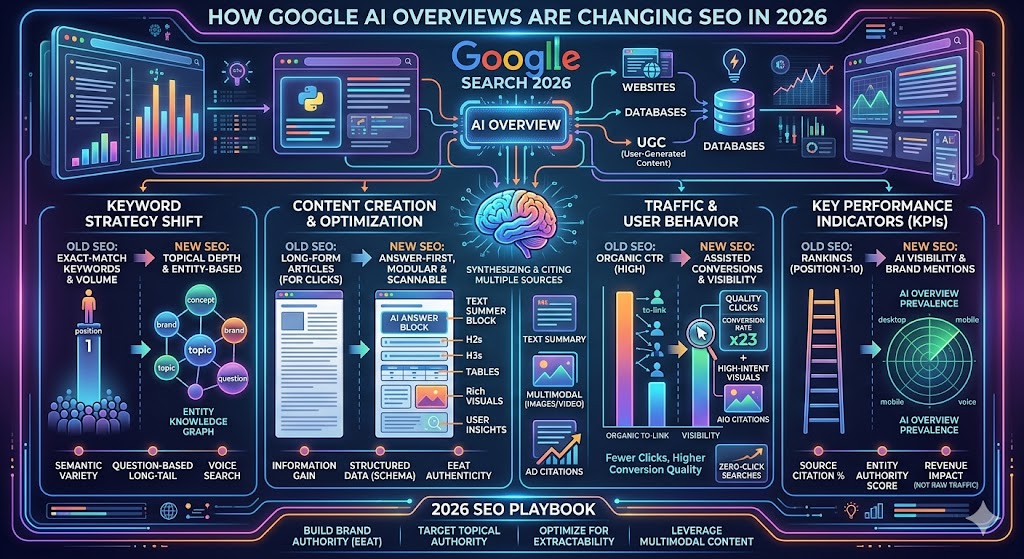
In this article, we will explore:
- What Google AI Overviews are
- Why they matter in 2026
- How they impact website traffic
- New SEO strategies for ranking
- E-E-A-T’s growing importance
- The fut search
Search engine optimization has entered one of the biggest transitions since Google first launched. For nearly two decades, businesses competed to rank at the top of search results because visibility meant clicks, traffic, and revenue. In 2026, that equation looks very different. Google AI Overviews are transforming search from a traditional list of blue links into an AI-powered answer engine that often gives users exactly what they need before they ever click a website.
The numbers reveal how significant this shift has become. Multiple industry studies now estimate that AI Overviews appear in roughly 47% to 60% of informational search queries, depending on industry and location. Some reports suggest that over 1.7 billion users encounter AI-generated summaries regularly while searching online. Organic click-through rates have dropped dramatically whenever AI Overviews appear, with some studies showing declines ranging from 25% to more than 60%.
For marketers, publishers, bloggers, SaaS companies, and eCommerce brands, this change is forcing a complete rethink of SEO strategy. Ranking #1 is still valuable, but it is no longer the only goal. The new challenge is becoming the source that Google’s AI trusts enough to cite directly inside its generated answers. That shift is creating an entirely new optimization discipline known as Generative Engine Optimization (GEO).
Understanding the Rise of AI-Powered Search
What Are Google AI Overviews?
Google AI Overviews are AI-generated summaries displayed at the top of search results pages. Instead of presenting users with a list of websites and expecting them to find answers themselves, Google’s AI combines information from multiple sources and generates a direct response. Users can often get a complete answer without leaving Google.
Think of traditional search as a librarian handing you ten books and asking you to find the answer yourself. AI Overviews are like the librarian reading those books, summarizing the information, and giving you the answer immediately. This dramatically changes user behavior because convenience usually wins.
The technology behind AI Overviews relies heavily on Google’s Gemini models, which analyze multiple web sources, identify relevant information, and create synthesized responses. Studies show that these AI-generated summaries often pull information from websites that are not even ranking in the top ten organic positions, proving that Google’s citation system differs from traditional rankings.
Why Google Is Prioritizing AI Answers
The reason is simple: user expectations have changed. People increasingly want instant answers rather than lengthy research processes. Tools like ChatGPT, Claude, Perplexity, and Gemini have trained users to expect conversational responses instead of traditional search experiences.
Google faces pressure from AI-native competitors. If users find faster answers elsewhere, Google’s search dominance becomes vulnerable. AI Overviews help Google maintain user engagement by keeping people inside the search ecosystem while delivering immediate value.
Even Google executives acknowledge that the system is still evolving. Recent discussions involving Google leadership highlighted concerns about AI responses becoming overly opinionated or occasionally inaccurate. Yet despite criticism, Google’s commitment to AI-powered search remains clear because it represents the future direction of information retrieval.
The Current State of AI Overviews in 2026
Key Statistics and Market Adoption
The adoption of AI Overviews has accelerated far faster than many SEO professionals predicted. Industry reports now estimate that nearly half of all qualifying searches trigger an AI-generated overview. Some research suggests the number reaches 60% for informational queries and question-based searches.
The following table highlights the current landscape:
| Metric | 2026 Estimate |
|---|---|
| Queries showing AI Overviews | 47%–60% |
| Monthly users exposed | 1.7+ billion |
| Average CTR decline | 25%–61% |
| Average sources cited | 4–5 sources |
| Zero-click search rate | 58%–60% |
These statistics illustrate why SEO teams are scrambling to adapt. Traditional ranking reports may show stable positions, yet traffic can decline because users receive answers directly on the search page.
Publishers have become especially concerned about this trend. Academic research examining AI Overview exposure found measurable traffic reductions for informational websites, particularly content that answers straightforward factual questions.
How User Search Behavior Has Changed
User behavior is evolving alongside AI search experiences. Instead of typing short keywords, people increasingly ask detailed questions. They expect nuanced, conversational responses rather than simple lists of links.
For example, someone searching “best CRM software” might now ask, “Which CRM is best for a small business with fewer than 20 employees and limited technical skills?” AI Overviews are designed specifically to address these complex queries.
The result is a shift from keyword matching toward intent understanding. Google’s AI attempts to understand what users truly want rather than simply matching search terms. This means content creators must think less about isolated keywords and more about comprehensive topic coverage.
Search sessions are also becoming shorter. When users receive answers instantly, fewer follow-up clicks occur. Research indicates that AI-generated summaries significantly increase the likelihood of searches ending without website visits.
The Impact on Traditional SEO
Declining Organic Click-Through Rates
For years, the primary SEO goal was securing top rankings. The formula was straightforward: rank higher, receive more clicks. AI Overviews disrupt that relationship.
Several studies report CTR declines between 25% and 61% when AI Overviews appear. Even websites holding the number-one organic position experience reduced traffic because the AI summary occupies the most visible section of the search results page.
Imagine spending years climbing Mount Everest only to discover Google built a helicopter service that flies users directly to the summit. That’s essentially what AI Overviews have done to informational searches.
This doesn’t mean SEO is dead. It means success metrics are changing. Visibility, brand mentions, citations, and AI inclusion now matter alongside traditional rankings. Businesses that focus exclusively on keyword positions risk missing the larger transformation happening across search.
The Growth of Zero-Click Searches
Zero-click searches have existed for years through featured snippets, knowledge panels, and instant answers. AI Overviews accelerate this trend dramatically.
Users can now receive detailed explanations, comparisons, summaries, and recommendations without visiting external websites. This reduces traffic for publishers but improves convenience for users.
Industries most affected include:
- Informational blogs
- Educational websites
- Health content
- Financial explainers
- Product comparison pages
- FAQ-based content
Brands relying heavily on informational traffic must now diversify acquisition channels. Email marketing, social media communities, brand awareness campaigns, and direct audience relationships are becoming increasingly important.
How Google Chooses Sources for AI Overviews
Authority Signals That Matter
One of the most fascinating discoveries about AI Overviews is that Google doesn’t simply cite the highest-ranking pages. Academic studies and industry analyses reveal that many cited pages appear outside the top ten search results.
This suggests Google’s AI evaluates content differently than traditional ranking algorithms. Factors likely include:
- Content expertise
- Topical relevance
- Factual accuracy
- Structured formatting
- Unique insights
- First-party experience
- Trustworthiness signals
Google increasingly favors content demonstrating real-world expertise rather than generic AI-generated summaries. Content that merely repeats information available elsewhere struggles to stand out.
Why Lower-Ranked Pages Can Still Get Cited
Many SEO professionals were surprised to discover that AI Overviews frequently reference pages ranking outside page one. This creates opportunities for smaller websites.
Instead of competing solely on domain authority, publishers can earn visibility through specialized expertise. A detailed niche guide with original insights may receive citations even if larger competitors outrank it traditionally.
The lesson is powerful: being useful matters more than being popular.
This creates a more merit-based environment where unique information, expert opinions, proprietary data, and real-world experience gain greater value than ever before.
The New Era of Generative Engine Optimization (GEO)
SEO vs GEO: What’s the Difference?
Generative Engine Optimization, often called GEO, focuses on optimizing content for AI-generated answers rather than traditional search rankings.
Traditional SEO asks:
“How do I rank higher?”
GEO asks:
“How do I become the source AI systems cite?”
The distinction may seem subtle, but the strategic implications are massive.
SEO emphasizes rankings, backlinks, and keyword targeting. GEO emphasizes authority, clarity, factual accuracy, and content structures that AI systems can easily understand and reference.
Many experts believe GEO will become a standard marketing discipline over the next few years, much like SEO evolved into its own industry in the early 2000s.
Content Structures AI Systems Prefer
AI systems process information differently than humans. Clear organization improves the likelihood of citation.
Successful content often includes:
- Direct answers near the beginning
- Question-and-answer sections
- Original statistics
- Expert quotes
- Structured headings
- Clear explanations
- Supporting evidence
Google recently reinforced that strong SEO fundamentals still matter for AI visibility. Technical accessibility, crawlability, and people-first content remain essential components of success.
Content Strategies That Win in AI Search
Experience-Driven Content
Experience has become one of the most valuable assets in modern SEO. AI can summarize existing information, but it cannot replicate genuine personal experience.
Google’s E-E-A-T framework—Experience, Expertise, Authoritativeness, and Trustworthiness—has become even more important in the AI era.
Readers and AI systems both value content that answers questions like:
- What actually happened?
- What results were achieved?
- What mistakes were made?
- What lessons were learned?
Case studies, personal insights, real-world testing, and firsthand examples create defensible content that AI struggles to duplicate.
Original Research and Data
If there is one content type thriving in 2026, it is original research.
AI Overviews constantly need reliable sources. Websites producing unique data become valuable reference points because no other source can provide identical information.
Examples include:
- Industry surveys
- Market reports
- Proprietary statistics
- Customer research
- Benchmark studies
- Trend analysis
Research consistently shows that websites cited inside AI Overviews often experience visibility gains despite broader traffic declines across informational search.
Topical Authority and Content Clusters
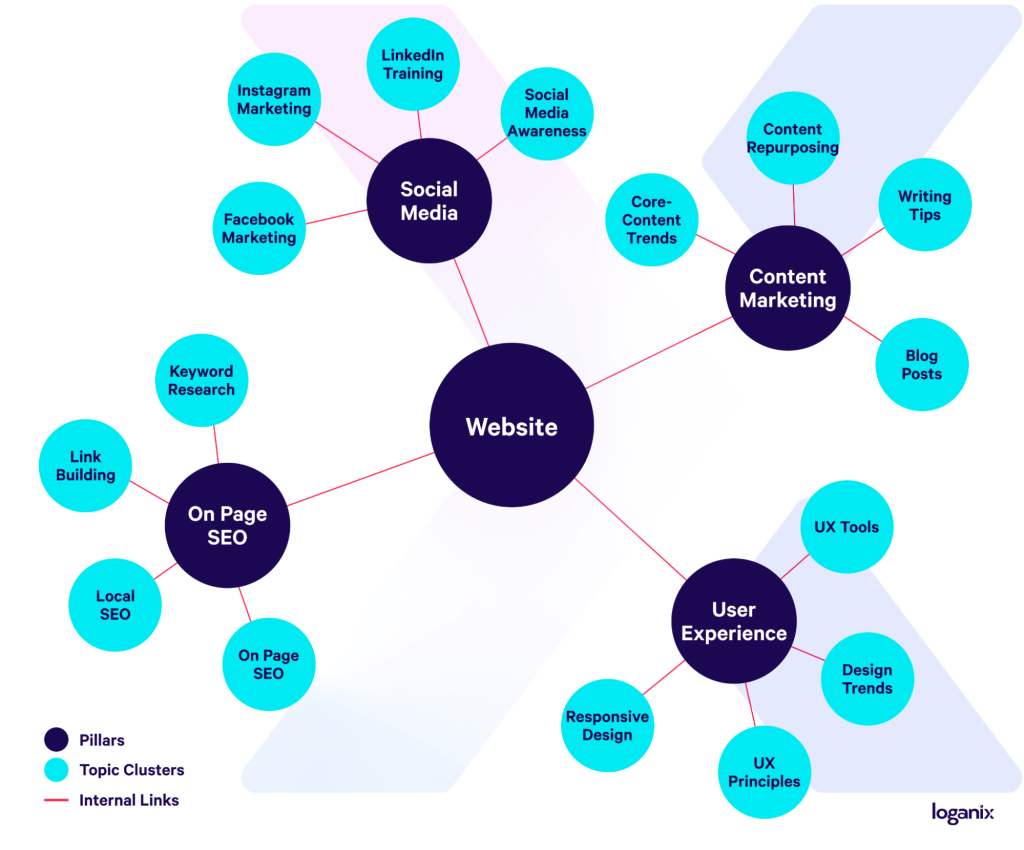
Publishing random articles is becoming less effective. Google’s AI increasingly evaluates websites based on topical depth.
A website covering every aspect of a niche appears more trustworthy than one publishing scattered content across unrelated topics.
For example, a cybersecurity website should create clusters covering:
- Threat detection
- Network security
- Compliance
- Cloud security
- Risk management
- Security awareness training
Topical authority helps AI systems recognize expertise across an entire subject area.
Technical SEO in the AI Age
Schema Markup and Structured Data
Structured data helps search engines understand content more effectively.
Schema markup acts like labels on storage boxes. Instead of forcing Google to guess what’s inside, schema explicitly identifies products, reviews, FAQs, organizations, articles, and other content elements.
While schema alone won’t guarantee AI Overview citations, it improves machine readability and content interpretation.
Businesses should prioritize:
- Article schema
- FAQ schema
- Product schema
- Organization schema
- Review schema
- Local business schema
As AI systems process billions of pages, clarity becomes a competitive advantage.
Crawlability and User Experience
Despite all the excitement around AI, foundational SEO remains essential.
Google recently reiterated that crawlability, indexing, page speed, and user experience continue to influence visibility in AI-powered search experiences.
Key technical priorities include:
| SEO Factor | Importance in 2026 |
| Mobile optimization | Very High |
| Core Web Vitals | High |
| Structured data | High |
| HTTPS security | Essential |
| Internal linking | High |
| Crawl efficiency | Essential |
Think of technical SEO as the foundation of a skyscraper. AI optimization may attract attention, but without a solid foundation, everything else becomes unstable.
The Future of SEO Beyond Rankings
Brand Authority as a Ranking Signal
One of the most important trends emerging in 2026 is the growing value of brand recognition.
When users specifically search for your company, Google receives strong signals about trust and relevance. Branded searches often indicate genuine audience demand.
AI systems also appear to favor recognized brands, trusted publishers, government websites, educational institutions, and authoritative communities like Reddit and Wikipedia for citations.
This means modern SEO increasingly overlaps with:
- Public relations
- Thought leadership
- Community building
- Social media presence
- Podcast appearances
- Brand marketing
The strongest search strategies no longer operate in isolation.
Preparing for AI Search Evolution
Google AI Overviews are not the final stage of search evolution. AI Mode, conversational search experiences, and agent-based search systems are already emerging.
Businesses should prepare by focusing on long-term assets rather than short-term algorithm tricks.
The winning formula includes:
- Deep expertise
- Original insights
- Strong brands
- Technical excellence
- Audience trust
- Consistent authority building
The websites that thrive won’t necessarily be those with the biggest budgets. They will be the ones creating information worth citing.
Conclusion
Google AI Overviews have fundamentally changed the rules of SEO in 2026. Search is no longer just about ranking pages; it is about becoming the trusted source behind AI-generated answers. Organic traffic patterns are shifting, click-through rates are declining, and zero-click searches are becoming increasingly common. At the same time, opportunities are emerging for brands that prioritize expertise, original research, topical authority, and exceptional user experiences.
The future belongs to websites that create genuinely useful content rather than content designed solely to manipulate rankings. AI can summarize information, but it still depends on trusted human-created sources. That reality gives publishers, businesses, and creators a clear path forward: become the source worth citing.